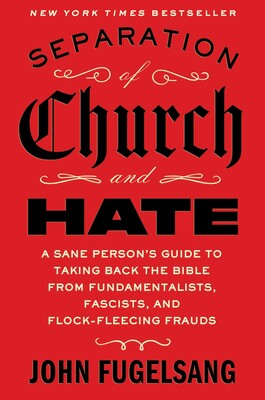
NEW YORK TIMES BESTSELLER * In the spirit of George Carlin and Christopher Hitchens, the son of a former Catholic nun and a Franciscan brother delivers a deeply irreverent and biblically correct takedown of far-right Christian hatred—a book for believers, atheists, agnostics, and anyone who’ll ever have to deal with a Christian nationalist.
For more than two centuries, the United States Constitution has given us the right to a society where church and state exist independently. But Christianity has been hijacked by far-right groups and politicians who seek to impose their narrow views on government, often to justify oppressive and unequal policies. The extremists who weaponize the Bible for earthly power aren’t actually on the side of Jesus—and historically they never have been. How do we fight back against those acting—literally—in bad faith?
Comedian and broadcaster John Fugelsang finally offers the answers. In this informative, perspective-shifting book, Fugelsang takes readers through common fundamentalist arguments on abortion, immigration, LGBTQ rights, and more—exposing their hypocrisy and inaccuracy through scripture, common sense, and deeply inappropriate humor. It offers practical tips on how to debate your loved one, coworker, or neighbor on the issues that divide us using that Bible they claim to follow.
But Fugelsang’s message is about more than just taking down hypocrites. It’s about fighting for the love, mercy, and service that are supposed to make up the heart of Christianity. Told with Fugelsang’s trademark blend of radical honesty, comedy, and deep political and religious knowledge, Separation of Church and Hate is the book every American needs today. It’s a rallying cry for compassion and clarity for anyone of any faith who’s sick of religion being used as a cloaking device for hate.
| Register here! | Wednesday, February 25, 2026 @ 7pm ET pages 1-148 Wednesday, March 25, 2026 @ 7pm ET pages 149-283 Download the Reading Group Guide here |
The Constitution of the United States of America
If you live in the United States, there has never been a more crucial time to read the Constitution, whether you’re reading it for the first time or revisiting it with fresh eyes. This short document shapes our rights, our laws, and our daily lives—yet many of us have engaged with it recently mostly through headlines, soundbites, or heated arguments. Join me for a welcoming two-part Zoom discussion where we’ll read the Constitution together (no prep required), then reflect and talk about what we notice, what we question, and how its words are being invoked in today’s America. Come as you are—curious, passionate, uncertain, or simply ready to return to the foundation we’re all standing on.
| Join the Zoom here! | NEW DATES: Monday, February 16, 2026 @ 7pm ET Tuesday, March 3, 2026 @ 7pm ET |
COMING UP…
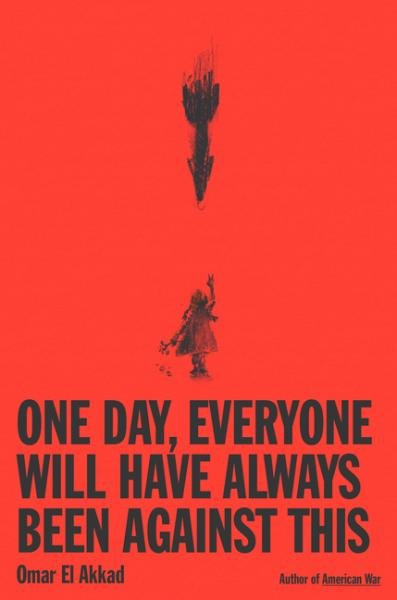
From award-winning novelist and journalist Omar El Akkad comes a powerful reckoning with what it means to live in a West that betrays its fundamental values
On October 25, 2023, after just three weeks of the bombardment of Gaza, Omar El Akkad put out a tweet: “One day, when it’s safe, when there’s no personal downside to calling a thing what it is, when it’s too late to hold anyone accountable, everyone will have always been against this.” This tweet has been viewed more than 10 million times.
As an immigrant who came to the West, El Akkad believed that it promised freedom. A place of justice for all. But in the past twenty years, reporting on the War on Terror, Ferguson, climate change, Black Lives Matter protests, and more, and watching the unmitigated slaughter in Gaza, El Akkad has come to the conclusion that much of what the West promises is a lie. That there will always be entire groups of human beings it has never intended to treat as fully human–not just Arabs or Muslims or immigrants, but whoever falls outside the boundaries of privilege. One Day, Everyone Will Have Always Been Against This is a chronicle of that painful realization, a moral grappling with what it means, as a citizen of the U.S., as a father, to carve out some sense of possibility in a time of carnage.
This is El Akkad’s nonfiction debut, his most raw and vulnerable work to date, a heartsick breakup letter with the West. It is a brilliant articulation of the same breakup we are watching all over the United States, in family rooms, on college campuses, on city streets; the consequences of this rupture are just beginning. This book is for all the people who want something better than what the West has served up. This is the book for our time.
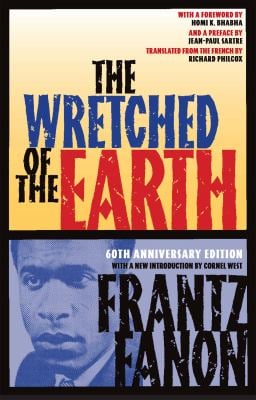
First published in 1961, and reissued in this sixtieth anniversary edition with a powerful new introduction by Cornel West, Frantz Fanon’s The Wretched of the Earth is a masterful and timeless interrogation of race, colonialism, psychological trauma, and revolutionary struggle, and a continuing influence on movements from Black Lives Matter to decolonization. A landmark text for revolutionaries and activists, The Wretched of the Earth is an eternal touchstone for civil rights, anti-colonialism, psychiatric studies, and Black consciousness movements around the world.
PAST BOOK DISCUSSIONS:

Tuesday, December 30, 2025 @ 7pm ET (forward, introduction, pages 1-88)
Wednesday, January 28, 2026 @ 7pm ET (pages 89-206)
Few modern voices have had as profound an impact on the black identity and critical race theory as Frantz Fanon, and Black Skin, White Masks represents some of his most important work. Fanon’s masterwork is now available in a new translation that updates its language for a new generation of readers.
A major influence on civil rights, anti-colonial, and black consciousness movements around the world, Black Skin, White Masks is the unsurpassed study of the black psyche in a white world. Hailed for its scientific analysis and poetic grace when it was first published in 1952, the book remains a vital force today from one of the most important theorists of revolutionary struggle, colonialism, and racial difference in history.

Wednesday, September 24, 2025 @ 7pm ET (pages 1-110)
Wednesday, October 29, 2025 @ 7pm ET (pages 111-225)
Wednesday, November 19, 2025 @ 7pm ET (pages 226-328)
A groundbreaking critique of the West’s historical, cultural, and political perceptions of the East that is—decades after its first publication—one of the most important books written about our divided world. • With a new foreword by Ussama Makdisi
“Intellectual history on a high order … and very exciting.” —The New York Times
In this wide-ranging, intellectually vigorous study, Said traces the origins of “orientalism” to the centuries-long period during which Europe dominated the Middle and Near East and, from its position of power, defined “the orient” simply as “other than” the occident. This entrenched view continues to dominate western ideas and, because it does not allow the East to represent itself, prevents true understanding.
Wednesday, July 30, 2025 @ 7pm ET (pages 1-125)
Wednesday, August 27, 2025 @ 7pm ET (pages 127-253)
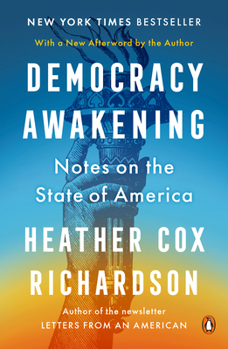
At a time when the very foundations of American democracy seem under threat, the lessons of the past offer a road map for navigating a moment of political crisis. In Democracy Awakening, acclaimed historian Heather Cox Richardson delves into the tumultuous journey of American democracy, tracing the roots of Donald Trump’s “authoritarian experiment” to the earliest days of the republic. She examines the historical forces that have led to the current political climate, showing how modern conservatism has preyed upon a disaffected population, weaponizing language and promoting false history to consolidate power.
With remarkable clarity and the same accessible voice that brings millions to her newsletter, Letters from an American, Richardson wrangles a chaotic news feed into a story that pivots effortlessly from the Founders to the abolitionists to Nixon to the January 6 insurrection. An essential read for anyone concerned about the state of America, Democracy Awakening is more than a history book; it’s a call to action. Richardson reminds us that democracy requires constant vigilance and participation from all of us, showing how we, as a nation, can take the lessons of the past to secure a more just and equitable future.
Wednesday, May 28, 2025 at 7pm ET (Pages 1-115)
Wednesday, June 25, 2025 at 7pm ET (Pages 116-218)
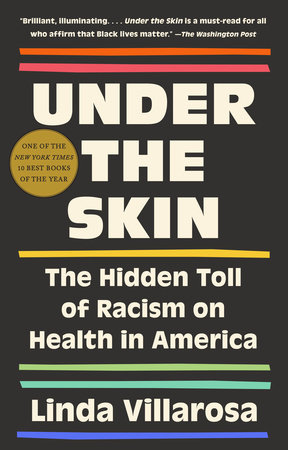
From an award-winning writer at the New York Times Magazine and a contributor to the 1619 Project comes a landmark book that tells the full story of racial health disparities in America, revealing the toll racism takes on individuals and the health of our nation.
In 2018, Linda Villarosa’s New York Times Magazine article on maternal and infant mortality among black mothers and babies in America caused an awakening. Hundreds of studies had previously established a link between racial discrimination and the health of Black Americans, with little progress toward solutions. But Villarosa’s article exposing that a Black woman with a college education is as likely to die or nearly die in childbirth as a white woman with an eighth grade education made racial disparities in health care impossible to ignore.
Now, in Under the Skin, Linda Villarosa lays bare the forces in the American health-care system and in American society that cause Black people to “live sicker and die quicker” compared to their white counterparts. Today’s medical texts and instruments still carry fallacious slavery-era assumptions that Black bodies are fundamentally different from white bodies. Study after study of medical settings show worse treatment and outcomes for Black patients. Black people live in dirtier, more polluted communities due to environmental racism and neglect from all levels of government. And, most powerfully, Villarosa describes the new understanding that coping with the daily scourge of racism ages Black people prematurely. Anchored by unforgettable human stories and offering incontrovertible proof, Under the Skin is dramatic, tragic, and necessary reading.
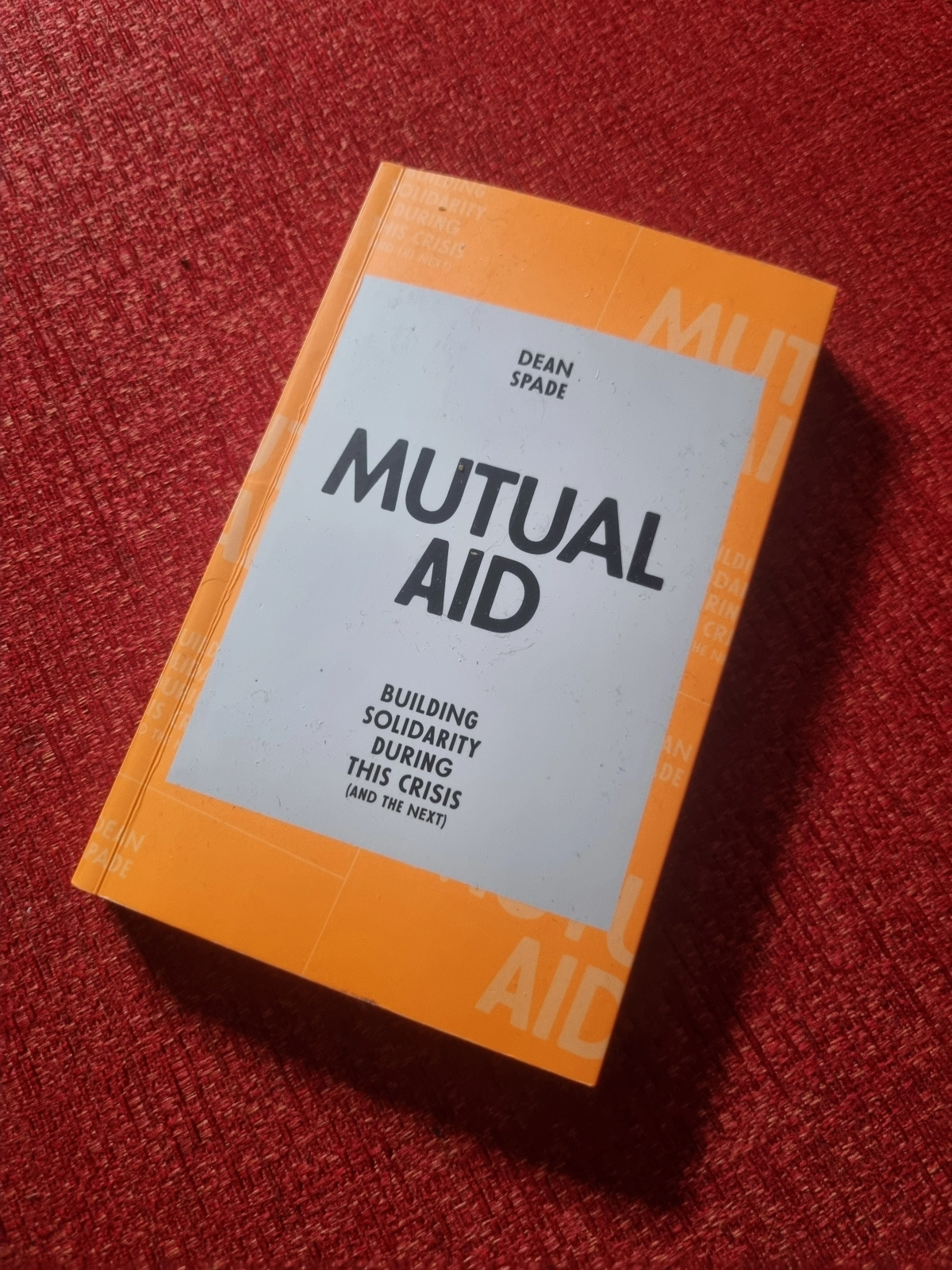
Survival work, when done alongside social movement demands for transformative change, is called mutual aid.
This book is about mutual aid: why it is so important, what it looks like, and how to do it. It provides a grassroots theory of mutual aid, describes how mutual aid is a crucial part of powerful movements for social justice, and offers concrete tools for organizing, such as how to work in groups, how to foster a collective decision-making process, how to prevent and address conflict, and how to deal with burnout.
Writing for those new to activism as well as those who have been in social movements for a long time, Dean Spade draws on years of organizing to offer a radical vision of community mobilization, social transformation, compassionate activism, and solidarity.
Wednesday, February 12, 2025 at 7pm ET
Register here: https://us02web.zoom.us/meeting/register/tZYkf–vqDwpGdBX6Kq3_hDhuTyeegHxQ6_s
Access the teaching guide here.
Mutual Aid is 148 pages. If you don’t finish the reading, come anyway.
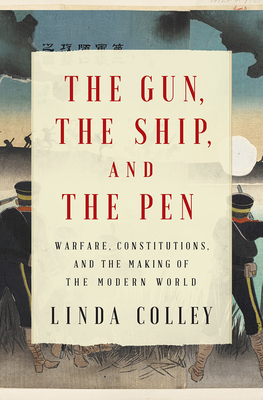
A work of extraordinary range and striking originality, The Gun, the Ship, and the Pen traces the global history of written constitutions from the 1750s to the twentieth century, modifying accepted narratives and uncovering the close connections between the making of constitutions and the making of war. In the process, Linda Colley both reappraises famous constitutions and recovers those that have been marginalized but were central to the rise of a modern world.
She brings to the fore neglected sites, such as Corsica, with its pioneering constitution of 1755, and tiny Pitcairn Island in the Pacific, the first place on the globe permanently to enfranchise women. She highlights the role of unexpected players, such as Catherine the Great of Russia, who was experimenting with constitutional techniques with her enlightened Nakaz decades before the Founding Fathers framed the American constitution. Written constitutions are usually examined in relation to individual states, but Colley focuses on how they crossed boundaries, spreading into six continents by 1918 and aiding the rise of empires as well as nations. She also illumines their place not simply in law and politics but also in wider cultural histories, and their intimate connections with print, literary creativity, and the rise of the novel.
Colley shows how—while advancing epic revolutions and enfranchising white males—constitutions frequently served over the long nineteenth century to marginalize indigenous people, exclude women and people of color, and expropriate land. Simultaneously, though, she investigates how these devices were adapted by peoples and activists outside the West seeking to resist European and American power. She describes how Tunisia generated the first modern Islamic constitution in 1861, quickly suppressed, but an influence still on the Arab Spring; how Africanus Horton of Sierra Leone—inspired by the American Civil War—devised plans for self-governing nations in West Africa; and how Japan’s Meiji constitution of 1889 came to compete with Western constitutionalism as a model for Indian, Chinese, and Ottoman nationalists and reformers.
Vividly written and handsomely illustrated, The Gun, the Ship, and the Pen is an absorbing work that—with its pageant of formative wars, powerful leaders, visionary lawmakers and committed rebels—retells the story of constitutional government and the evolution of ideas of what it means to be modern.
4 group discussions.
Wednesdays at 7pm ET: January 29, 2025 / February 26, 2025 / March 26, 2025 / April 30, 2025
Register for The Gun, The Ship, and The Pen: Warfare, Constitutions, and the Making of the Modern World here.
Reading schedule: January 29 – Chapters 1 & 2 / February 26 – Chapters 3 & 4 /
March 26 – Chapters 5 & 6 / April 30 – Chapters 7 & 8
On Tyranny focuses on the concept of tyranny in the context of the modern United States politics, analyzing what Snyder calls “America’s turn towards authoritarianism”. Explaining that “history does not repeat, but it does instruct,” he analyzes recent European history to identify conditions that can enable established democracies to transform into dictatorships. The short (126 pages) book is presented as a series of twenty instructions on how to combat the rise of tyranny, such as “Defend institutions”, “Remember professional ethics”, and “Believe in truth”.
On Tyranny is a call to arms and a guide to resistance, with invaluable ideas for how we can preserve our freedoms in the uncertain years to come.
Wednesday, January 15, 2025 at 7pm ET
Register here: https://us02web.zoom.us/meeting/register/tZMpduuprzgoGt3oUcoXCrKubauhJ9EpyF26
On Tyranny is very short (small book, 126 pages). And if you don’t finish reading it, come anyway.

THE REAL ORIGIN OF OUR SPECIES: a myth-busting, eye-opening landmark account of how humans evolved, offering a paradigm shift in our thinking about what the female body is, how it came to be, and how this evolution still shapes all our lives today
In Eve, with boundless curiosity and sharp wit, Cat Bohannon covers the past 200 million years to explain the specific science behind the development of the female sex: “We need a kind of user’s manual for the female mammal. A no-nonsense, hard-hitting, seriously researched (but readable) account of what we are. How female bodies evolved, how they work, what it really means to biologically be a woman. Something that would rewrite the story of womanhood. This book is that story. We have to put the female body in the picture. If we don’t, it’s not just feminism that’s compromised. Modern medicine, neurobiology, paleoanthropology, even evolutionary biology all take a hit when we ignore the fact that half of us have breasts. So it’s time we talk about breasts. Breasts, and blood, and fat, and vaginas, and wombs—all of it. How they came to be and how we live with them now, no matter how weird or hilarious the truth is.” Eve is not only a sweeping revision of human history, it’s an urgent and necessary corrective for a world that has focused primarily on the male body for far too long. Picking up where Sapiens left off, Eve will completely change what you think you know about evolution and why Homo sapiens has become such a successful and dominant species.
3 group discussions.
Wednesdays : October 30, 2024 @ 7:30pm ET/ November 26, 2024 @ 7pm ET/
December 28, 2024 @ 7pm ET
Register for Eve: How the Female Body Drove 200 Million Years of Evolution here.
Reading schedule: October 30 – to page 162 / November 26 – to page 296 / December 18 – to page 438
Edward Rutherfurd celebrates America’s greatest city in a rich, engrossing saga, weaving together tales of families rich and poor, native-born and immigrant—a cast of fictional and true characters whose fates rise and fall and rise again with the city’s fortunes. From this intimate perspective we see New York’s humble beginnings as a tiny Indian fishing village, the arrival of Dutch and British merchants, the Revolutionary War, the emergence of the city as a great trading and financial center, the convulsions of the Civil War, the excesses of the Gilded Age, the explosion of immigration in the late nineteenth and early twentieth centuries, the trials of World War II, the near demise of New York in the 1970s and its roaring rebirth in the 1990s, and the attack on the World Trade Center. A stirring mix of battle, romance, family struggles, and personal triumphs, New York: The Novel gloriously captures the search for freedom and opportunity at the heart of our nation’s history.
4 group discussions.
Wednesdays at 7pm ET: June26, 2024 / July 31, 2024 / August 28, 2024 / September25, 2024
Register for New York by Edward Rutherfurd here.
Reading schedule: June 26 – to page 233 / July 31- to page 409 / August 28 – to page 706 / September 25 – to page 860
Caste: The Origins of Our Discontents by Isabel Wilkerson
The Pulitzer Prize–winning, bestselling author of The Warmth of Other Suns examines the unspoken caste system that has shaped America and shows how our lives today are still defined by a hierarchy of human divisions.
“As we go about our daily lives, caste is the wordless usher in a darkened theater, flashlight cast down in the aisles, guiding us to our assigned seats for a performance. The hierarchy of caste is not about feelings or morality. It is about power—which groups have it and which do not.”
In this brilliant book, Isabel Wilkerson gives us a masterful portrait of an unseen phenomenon in America as she explores, through an immersive, deeply researched narrative and stories about real people, how America today and throughout its history has been shaped by a hidden caste system, a rigid hierarchy of human rankings.
Beyond race, class, or other factors, there is a powerful caste system that influences people’s lives and behavior and the nation’s fate. Linking the caste systems of America, India, and Nazi Germany, Wilkerson explores eight pillars that underlie caste systems across civilizations, including divine will, bloodlines, stigma, and more. Using riveting stories about people—including Martin Luther King, Jr., baseball’s Satchel Paige, a single father and his toddler son, Wilkerson herself, and many others—she shows the ways that the insidious undertow of caste is experienced every day. She documents how the Nazis studied the racial systems in America to plan their out-cast of the Jews; she discusses why the cruel logic of caste requires that there be a bottom rung for those in the middle to measure themselves against; she writes about the surprising health costs of caste, in depression and life expectancy, and the effects of this hierarchy on our culture and politics. Finally, she points forward to ways America can move beyond the artificial and destructive separations of human divisions, toward hope in our common humanity.
4 group discussions:
Wednesdays at 7pm ET: February 28, 2024 / March 27, 2024 / April 24, 2024 / May 29, 2024
Register for Caste: The Origins of Our Discontents here.
Reading schedule: February 28 – Parts 1 & 2 / March 27 – Parts 3 & 4 / April 24 – Parts 4 & 5 / May 29 – Parts 6 & 7
There There by Tommy Orange

Tommy Orange’s wondrous and shattering novel follows twelve characters from Native communities: all traveling to the Big Oakland Powwow, all connected to one another in ways they may not yet realize. Among them is Jacquie Red Feather, newly sober and trying to make it back to the family she left behind. Dene Oxendene, pulling his life together after his uncle’s death and working at the powwow to honor his memory. Fourteen-year-old Orvil, coming to perform traditional dance for the very first time. Together, this chorus of voices tells of the plight of the urban Native American–grappling with a complex and painful history, with an inheritance of beauty and spirituality, with communion and sacrifice and heroism. Hailed as an instant classic, There There is at once poignant and unflinching, utterly contemporary and truly unforgettable.
We discuss the book on Wednesday, January 31, 2024 at 7pm ET.
Register for There There here.
If you have previously read the book, you are more than welcome to join our discussion.
The Dawn of Everything: A New History of Humanity
A dramatically new understanding of human history, challenging our most fundamental assumptions about social evolution—from the development of agriculture and cities to the origins of the state, democracy, and inequality—and revealing new possibilities for human emancipation.
The Dawn of Everything fundamentally transforms our understanding of the human past and offers a path toward imagining new forms of freedom, new ways of organizing society. This is a monumental book of formidable intellectual range, animated by curiosity, moral vision, and a faith in the power of direct action.
We discuss one section of the book on the last Wednesday of every month at 7pm ET.
Register for The Dawn of Everything here.
It’s about 30 minutes of reading per week. You are welcome to come to one or all of our discussions. Here’s the reading schedule:
February 22, 2023 pages 1-48 / March 29, 2023 pages 48-98 / April 26, 2023 pages 98-147 / May 31, 2023 pages 148-194 / June 28, 2023 pages 195-241 / July 26, 2023 pages 242-297 / August 30, 2023 pages 297-345 / September 27, 2023 pages 346-391 / October 25, 2023 pages 392-440 / November 29, 2023 pages 441-492 / December 27, 2023 pages 493-526
We discuss one chapter on the last Wednesday* of every month @ 7pm.
Come to one, come to many, or come to all!
(*Except for 11/17/21)
Register for A People’s History of the United States
Chapter 9: September 29, 2021 / Chapter 10: October 27, 2021 / Chapter 11: November 17, 2021 / Chapter 12: December 29, 2021 / Chapter 13: January 26, 2022 / Chapter 14: February 23, 2022 / Chapter 15: March 30, 2022 / Chapter 16: April 27, 2022 / Chapter 17: May 25, 2022 / Chapter 18: June 29, 2022 / Chapter 19: July 27, 2022 / Chapter 20: August 31, 2022 / Chapter 21: September 28, 2022 / Chapter 22: October 26, 2022 / Chapter 23: November 30, 2022 / Chapter 24: December 28, 2022 / Chapter 25: January 25, 2023
Register for The End of Policing
April 1: pages 1-54
April 22: pages 55-107
May 13: pages 108-175
June 3: pages 176-228
Discussion dates: January 3, 17, & 31 and February 14 & 28, 2021
Register for Radical Dharma
January 3: Preface, Introduction, How To Use This Book and pages 1-36
January 17: Pages 37-74
January 31: Pages 75-119
February 14: Pages 121-153
February 28: Pages 154-204
Discussion dates: January 14, February 4, 25, & March 18, 2021
January 14: Preface & Pages 1-57
February 4: Pages 58-137
February 25: Pages 138-193
March 18: Pages 194-239
Register for The Color of Law
Watch the author discuss The Color of Law at a book talk at the Tenement Museum on October 27, 2020 (I got to ask a question at the end!):
 Valerie G. Keane